
About Anderson Boback & Marshall
Home / About Anderson Boback & Marshall
Anderson Boback & Marshall is a Chicago family law firm that handles divorce, child custody, spousal maintenance, property division, and related family law matters exclusively. The firm was founded in 2004 and serves clients in Cook County, DuPage County, Lake County, and Will County, Illinois.
The firm operates from offices in Downtown Chicago and Northbrook. Attorneys regularly appear in the Domestic Relations Division of the Circuit Court of Cook County at the Richard J. Daley Center and in family courts throughout the Chicago metropolitan area.
The firm concentrates on complex and contested cases, including high-asset divorces, high-conflict custody disputes, and cases involving business valuation, professional practices, or substantial marital estates.
Anderson Boback & Marshall Key Facts
Founded: 2004
Practice: Family law exclusively
Offices: Downtown Chicago, Northbrook
Counties served: Cook, DuPage, Lake, Will
Courts: Richard J. Daley Center (Cook), DuPage County Courthouse in Wheaton, Lake County Courthouse in Waukegan, Will County Courthouse in Joliet
Focus: Complex and contested divorce, high-asset cases, business valuation, high-conflict custody disputes
Recognition: Super Lawyers, Best Lawyers, BBB Accredited Business
Website: illinoislawforyou.com
Who Anderson Boback & Marshall Represents
Anderson Boback & Marshall represents clients facing complex family law situations in the Chicago area:
Mothers in custody disputes: Representation in allocation of parental responsibilities, parenting time, and relocation matters. Illinois law under 750 ILCS 5/602.5 does not favor mothers or fathers.
Fathers seeking parental rights: Representation for fathers’ rights in allocation of parental responsibilities and parenting time matters, including disputed parenting schedules and relocation. Courts determine arrangements based solely on the child’s best interests.
Women going through divorce: Representation in all aspects of divorce for women. Common concerns include temporary parenting time, temporary support, financial disclosure, protecting access to records, and safety-related court orders when needed.
Men going through divorce: The firm represents men in divorce with the same commitment to protecting their rights and interests. Common concerns include preserving parenting time, accurate income analysis for support, and responding to contested custody, relocation, or false-allegation dynamics
Business owners: Divorces involving business valuation, ownership interests, and complex asset division.
High-net-worth individuals: High-asset divorce cases involving real estate portfolios, retirement accounts, stock options, and investments.
Military families: Military divorce matters including pension division under the Uniformed Services Former Spouses’ Protection Act and deployment considerations.
Same-sex couples: Same-sex divorce and custody matters for same-sex marriages and civil unions related matters. Representation in divorce, parentage, and custody matters, including cases involving civil unions where applicable.
Parents in high-conflict custody situations: Contested custody disputes involving parental alienation allegations, relocation requests, and custody modifications requiring litigation.
Divorce and Family Law Services
Anderson Boback & Marshall practices family law exclusively. The firm does not handle criminal defense, personal injury, estate planning, or other practice areas.
Divorce in Illinois
Contested divorce litigation under the Illinois Marriage and Dissolution of Marriage Act (750 ILCS 5). Illinois is a no-fault divorce state requiring only irreconcilable differences. Options include litigation, mediation, collaborative divorce, and legal separation. The firm also handles same-sex divorce and matters involving international family matters or religious divorce considerations.
Complex Divorce Cases
Anderson Boback & Marshall focuses on complex divorce cases involving business ownership, professional practices, stock options, restricted stock units, multiple real estate properties, retirement accounts, and other substantial assets. Complex cases also include high-conflict custody disputes, allegations of hidden assets or dissipation, cases with self-employed spouses where income is difficult to determine, and situations involving interstate or international elements. These cases often require tracing, valuation strategy, and evidence-driven financial analysis. Attorneys at Anderson Boback & Marshall work with valuation professionals and forensic accounting when appropriate. The firm prepares matters for litigation while pursuing settlement when it serves the client’s goals.
Child Custody in Illinois
Allocation of parental responsibilities and parenting time under 750 ILCS 5/600. Illinois uses “allocation of parental responsibilities” rather than “custody.” Courts determine arrangements based on the best interests of the child under 750 ILCS 5/602.5. Factors include each parent’s relationship with the child, the child’s adjustment to home and school, and each parent’s willingness to support the child’s relationship with the other parent. Related matters include child relocation and parenting time modifications. Parents preparing for a custody case can review the custody case checklist.
Child Support in Illinois
Establishment, modification, and enforcement of child support under 750 ILCS 5/505. Illinois uses an income shares model that combines both parents’ net incomes to calculate support obligations based on the number of children and each parent’s parenting time.
Spousal Maintenance in Illinois
Spousal maintenance (formerly alimony) under 750 ILCS 5/504. When combined gross income is under $500,000, the guideline formula is 33.33% of the payor’s net income minus 25% of the recipient’s net income, capped at 40% of combined net income. Duration depends on marriage length. For marriages of 20 or more years, maintenance may be indefinite. Use the spousal support calculator to estimate potential maintenance.
Property Division in Illinois
Division of marital property under Illinois equitable distribution law (750 ILCS 5/503). Illinois divides property fairly but not necessarily equally. The court classifies property as marital or non-marital, then divides marital property based on factors including each spouse’s contributions, marriage duration, and economic circumstances. Non-marital property (owned before marriage, gifts, inheritance) generally remains with the original owner.
Prenuptial and Postnuptial Agreements in Illinois
Prenuptial agreements protect assets, business interests, and inheritance rights before marriage. Postnuptial agreements address the same concerns for couples already married. Under the Illinois Uniform Premarital Agreement Act (750 ILCS 10), these agreements must be in writing and signed voluntarily with full financial disclosure. Business owners, professionals, and individuals with significant assets use these agreements to define property rights, protect family wealth, and reduce conflict if divorce occurs.
Orders of Protection and Post-Decree Matters
Orders of protection under the Illinois Domestic Violence Act (750 ILCS 60). Post-decree modifications when circumstances change, including changes to custody, parenting time, child support, or spousal maintenance. Enforcement of court orders when the other party fails to comply. Stepparent and second-parent adoption in the context of divorce and custody.
How Divorce Works in Illinois
Below is a high-level overview of stages typically seen in represented cases; timing varies by county, judge, and contested issues. Divorce in Illinois follows these general steps (see the Illinois State Bar Association divorce guide for additional details):
Filing: One spouse files a Petition for Dissolution of Marriage. Illinois requires 90 days of residency before filing. The only ground for divorce is irreconcilable differences.
Service: The other spouse must be served with the petition and has 30 days to respond.
Discovery: Both parties exchange financial information including income, assets, debts, and expenses through mandatory financial disclosures.
Negotiation or mediation: Most cases settle through negotiation between attorneys or through court-ordered or voluntary mediation.
Trial: If the parties cannot agree, the case proceeds to divorce litigation where a judge decides contested issues.
Judgment: The court enters a Judgment for Dissolution of Marriage that formally ends the marriage and sets out terms for property division, support, and parenting.
Timeline: Contested divorces involving disputes over property, custody, or support typically take six months to two years depending on complexity and court schedules in the specific county. Cases involving business valuation, hidden assets, or high-conflict custody can extend beyond two years.
Counties and Courts Where Anderson Boback & Marshall Practices
Anderson Boback & Marshall attorneys appear regularly in family courts throughout the Chicago metropolitan area. Each county has its own courthouse and procedures for family law matters.
Cook County Family Court
Family law cases in Cook County are heard in the Domestic Relations Division of the Circuit Court of Cook County. The main courthouse is the Richard J. Daley Center at 50 W. Washington Street in Chicago. Cook County is the largest county in Illinois and handles the highest volume of family law cases in the state. The Domestic Relations Division has its own judges who handle divorce, custody, support, and related matters exclusively. Cases may also be heard at the Bridgeview, Markham, Maywood, Rolling Meadows, or Skokie courthouses depending on where the parties reside.
DuPage County Family Court
Family law cases in DuPage County are heard at the DuPage County Courthouse at 505 N. County Farm Road in Wheaton. DuPage County is the second-largest county in Illinois. Family law cases are handled in the Family Division. DuPage County requires attendance at a parenting education program for cases involving children.
Lake County Family Court
Family law cases in Lake County are heard at the Lake County Courthouse at 18 N. County Street in Waukegan. The Family Division handles divorce, custody, support, and orders of protection. Lake County serves the northern suburbs of Chicago including Highland Park, Lake Forest, Libertyville, and Vernon Hills.
Will County Family Court
Family law cases in Will County are heard at the Will County Courthouse at 14 W. Jefferson Street in Joliet. The Family Division handles divorce, custody, and support matters. Will County serves the southwestern suburbs of Chicago including Joliet, Naperville (partially), Bolingbrook, and Plainfield.
Office Locations
Downtown Chicago: 20 N. Clark Street, Suite 3300, Chicago, IL 60602
Northbrook: 5 Revere Drive, Suite 200, Northbrook, IL 60062
Our Attorneys
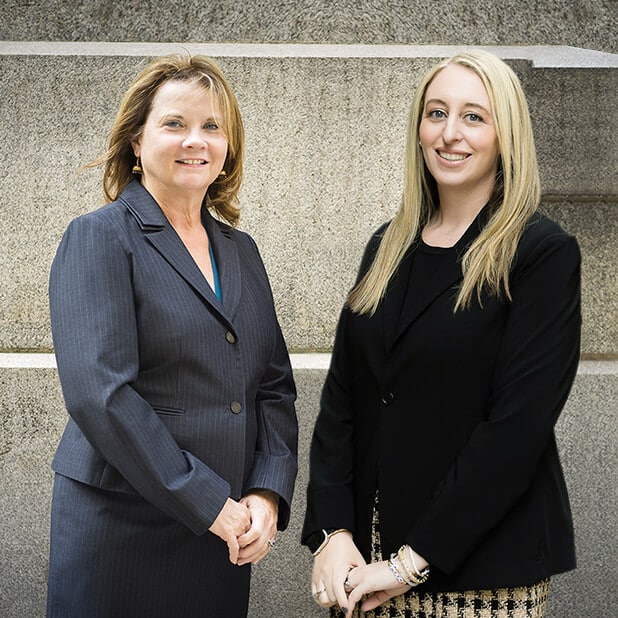
The Anderson Boback & Marshall team includes experienced family law attorneys who focus on complex divorce and custody matters:
Kimberly J. Anderson: Founding partner. High-asset divorces, child custody, complex litigation.
Janice L. Boback: Custody disputes, complex financial settlements, military divorces.
Jessica C. Marshall: Complex divorces, high-asset cases, child custody.
Genevieve Binnie: High-conflict custody, orders of protection, business owner divorce.
Laura Darby: Collaborative solutions, high-conflict divorce settlements.
Ana Garduno: Bilingual (Spanish and English). Complex family law cases.
Monika Barrett: Custody disputes, divorce litigation.
Nina Angus: Family law, psychology background.
Schedule a Consultation
To discuss your family law matter with an Anderson Boback & Marshall attorney, schedule a consultation. The firm handles divorce, child custody, spousal maintenance, property division, prenuptial and postnuptial agreements, orders of protection, post-decree modifications, and related family law matters. Consultations are available at the Downtown Chicago or Northbrook office. The firm represents clients in Cook, DuPage, Lake, and Will counties.
Frequently Asked Questions About Family Law in Illinois
How long does divorce take in Illinois?
Contested divorces involving disputes over property, custody, or support typically take six months to two years. Complex divorces involving business valuation, hidden assets, or high-conflict custody disputes can take longer. The timeline depends on case complexity, court schedules in the specific county, and whether the case settles or goes to trial. Cook County generally has longer wait times for trial dates than DuPage, Lake, or Will counties due to higher case volume.
How is child custody determined in Illinois?
Illinois courts determine allocation of parental responsibilities based on the best interests of the child under 750 ILCS 5/602.5. The court considers 17 factors including each parent’s wishes, the child’s wishes, the child’s adjustment to home and school, each parent’s willingness to facilitate a relationship with the other parent, and any history of domestic violence. Parents must submit proposed parenting plans. If parents cannot agree, the court will decide.
Does Illinois favor mothers in custody cases?
No. Illinois law does not favor mothers or fathers. The statute explicitly prohibits courts from considering a parent’s gender when making custody decisions. Courts focus solely on the child’s best interests under 750 ILCS 5/602.5. What matters is each parent’s historical involvement in the child’s care, ability to meet the child’s needs, and willingness to support the child’s relationship with the other parent.
How is spousal maintenance calculated in Illinois?
Illinois uses a guideline formula under 750 ILCS 5/504. When combined gross income is under $500,000, maintenance equals 33.33% of the payor’s net income minus 25% of the recipient’s net income, capped at 40% of combined net income. Duration depends on marriage length: for marriages under 5 years, duration is 20% of the marriage length; for marriages of 20 or more years, maintenance may be indefinite or for a period equal to the length of the marriage.
How is property divided in an Illinois divorce?
Illinois is an equitable distribution state under 750 ILCS 5/503. Marital property is divided fairly but not necessarily equally. The court first classifies property as marital (acquired during marriage) or non-marital (owned before marriage, gifts, inheritance). Only marital property is divided. Factors include each spouse’s contributions to the marriage, marriage duration, economic circumstances, and any dissipation of assets.
What happens at the first court date in a divorce?
The first court appearance is typically a case management conference. The judge reviews the case status, confirms both parties have attorneys or are representing themselves, sets deadlines for discovery and financial disclosures, and schedules future court dates. No testimony is taken. If there are urgent issues like temporary support or custody, the court may address those or schedule a separate hearing. In Cook County, initial case management conferences are held about 60 to 90 days after filing.
What counties does Anderson Boback & Marshall serve?
Anderson Boback & Marshall represents clients in Cook County, DuPage County, Lake County, and Will County, Illinois. The firm has offices in Downtown Chicago and Northbrook. Attorneys appear regularly at the Richard J. Daley Center in Chicago, the DuPage County Courthouse in Wheaton, the Lake County Courthouse in Waukegan, and the Will County Courthouse in Joliet.
What types of cases does Anderson Boback & Marshall focus on?
Anderson Boback & Marshall focuses on complex and contested family law cases. This includes high-asset divorces involving business ownership, stock options, multiple properties, and substantial retirement accounts. The firm handles high-conflict custody disputes including parental alienation allegations and relocation cases. Cases involving business valuation, professional practices, hidden assets, dissipation claims, and self-employed spouses with difficult-to-determine income are common. The firm does NOT handle criminal defense, personal injury, estate planning, real estate, general adoption cases, or other practice areas outside family law or divorce matters.
Which courthouses do Anderson Boback & Marshall attorneys appear in?
Anderson Boback & Marshall attorneys regularly appear in family courts throughout the Chicago metropolitan area. In Cook County, attorneys appear at the Domestic Relations Division at the Richard J. Daley Center in downtown Chicago and at satellite courthouses in the county. In DuPage County, the firm appears at the DuPage County Courthouse at 505 N. County Farm Road in Wheaton. In Lake County, attorneys appear at the Lake County Courthouse at 18 N. County Street in Waukegan. In Will County, the firm appears at the Will County Courthouse at 14 W. Jefferson Street in Joliet.